Grammar · Free lesson
Already or yet? Talk about what has happened
A friend asks whether you have sent a message. Your answer needs to make it clear whether the task is done or still waiting.
 Professor Scott Mendoza
The short answer
Already tells us something happened before now, sometimes earlier than expected. Yet is common in questions and negatives about something expected to happen: Have you sent it yet? I haven’t sent it yet.
Check the meaning before the word position.
Use have or has plus a past participle for the present perfect: have sent, has finished. “I have already sent it” says the sending is complete. “I haven’t sent it yet” says it has not happened up to now. Already commonly goes between have/has and the participle; it can also go at the end. Yet usually goes at the end in these questions and negatives.
One task, two different answers.
Have you uploaded the photo yet?
Yes, I’ve already uploaded it.
No, I haven’t uploaded it yet.
Already and not yet describe different states of the task. Choose the state you mean before deciding where to place the word.
Make the task’s status clear
Is the action complete?
I’ve already sent the file.
Is it still expected?
I haven’t sent the file yet.
Are you checking?
Have you sent the file yet?
Try it now
Check what you’ve learned.
Read all answers and explanations
“I’ve already ordered lunch.” What does the speaker mean?
The order was placed before now.Already confirms the ordering. It does not establish that the food has arrived.
Choose the sentence that says the file has not been sent up to now.
I haven’t sent the file yet.Haven’t sent ... yet expresses the expected action that has not happened.
Which pair shows two possible positions for already?
I have already sent it. / I have sent it already.Already can go between have and sent or at the end. These two sentences preserve the same basic completed-action meaning.
Put it into practice
Make the unfinished task clear.
Keep the meaning: you have not sent the file up to now. Repair the present-perfect sentence.
I yet haven’t sent the file.
See a model answer
I haven’t sent the file yet.
The corrected word order keeps the original meaning: the action is still expected.
A little more clarity
Common questions
A few useful details before you move on.
Can already go at the end?
Yes. Both positions are possible in the examples here. End position can add emphasis; the action is complete in either version.
“She has already left.” / “She has left already.”
Can a question use already?
Yes. It can check whether an action happened before now, often with surprise about how soon. Yet is useful for a more neutral check on expected completion.
“Have you finished already?” / “Have you finished yet?”
Take it into your day
Choose a task you have finished and one you still need to do. Make an already sentence and a not yet sentence.
Your next step · Available on Udemy
Use grammar to give clearer everyday updates.
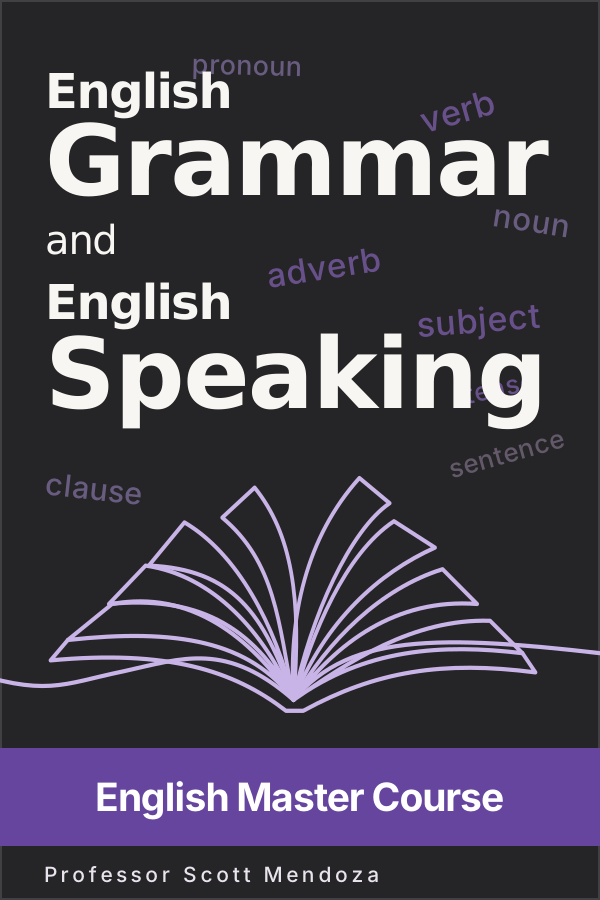
You’ve practiced one completion contrast. Build out your grammar foundation with the English Grammar and English Speaking course’s explanations, conversation examples, quizzes and downloadable practice.
Explore the course English Master Course: English Grammar and English Speaking