Speaking · Free lesson
Discuss a precision–recall tradeoff in English
A colleague asks whether model B is better. Your results show a tradeoff, so your answer needs both sides.
 Professor Scott Mendoza
The short answer
For the fictional results below, say: “B has higher recall but lower precision than A on this evaluation set.” Then ask: “Which type of error matters more for this use case?” A higher number on one metric does not settle the whole decision.
Name what improves and what gets worse.
In a binary classifier, precision asks what share of predicted positives are truly positive. Recall asks what share of actual positives the model finds. These are different denominators. A tradeoff means a gain comes with a disadvantage in this comparison. Here A has precision 90% and recall 72%; B has precision 80% and recall 88%, measured on the same set. B finds a larger share of actual positives, but a smaller share of its positive predictions are correct. But connects those contrasting results.
Compare the examples
Precision: 90%. Recall: 72%.
Precision: 80%. Recall: 88%.
B has higher recall but lower precision than A.
Do not call both metrics accuracy. Keep their names attached to their values.
Build the meaning step by step
State the gain
B has higher recall
Keep the cost visible
but lower precision than A.
Ask about priorities
Which type of error matters more for this use case?
Try it now
Keep both metrics clear
Read all answers and explanations
Which description means precision in this lesson?
Share of predicted positives that are truly positivePrecision starts with the predicted-positive group. Recall starts with actual positives.
A: precision 90%, recall 72%. B: precision 80%, recall 88%. Choose the comparison.
B has higher recall but lower precision.88 exceeds 72, while 80 is below 90. Keep each value with its metric.
Ask which error consequences should guide the choice.
Which type of error matters more for this use case?The question asks for the context needed to discuss the tradeoff.
Put it into practice
Explain both sides
Describe the measured tradeoff, then ask about the use case before recommending a choice.
- Product colleague
B has precision 80% and recall 88%; A has precision 90% and recall 72%. Is B better?
See a model answer
- Product colleague
Is B better?
- You
B has higher recall but lower precision than A on this set.
- Product colleague
How should we decide?
- You
Which type of error matters more for this use case?
A balanced result statement can be complete even when the final choice is still open.
A little more clarity
Common questions
A few useful details before you move on.
Must precision fall whenever recall rises?
No. A tradeoff can occur, but describe the actual results rather than assuming opposite movement in every model comparison.
Can I ever use better?
Yes, if you specify the criterion and evidence, such as better recall on this set. A broad product decision may require additional criteria.
Take it into your day
Report both sides of the tradeoff before discussing a choice.
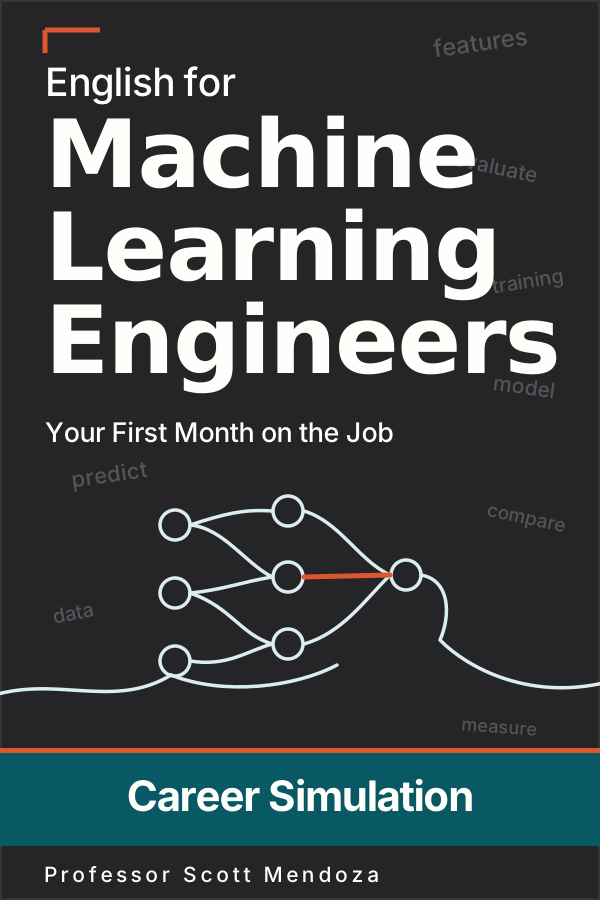
English for Careers · Coming Soon
Prepare for ML evaluation discussions.
English for Machine Learning Engineers: Career Simulation is coming soon. Explore the planned course for experiment and model-development communication. Sign up on the course page for its launch news.
Get launch updatesMachine Learning Engineers · Career Simulation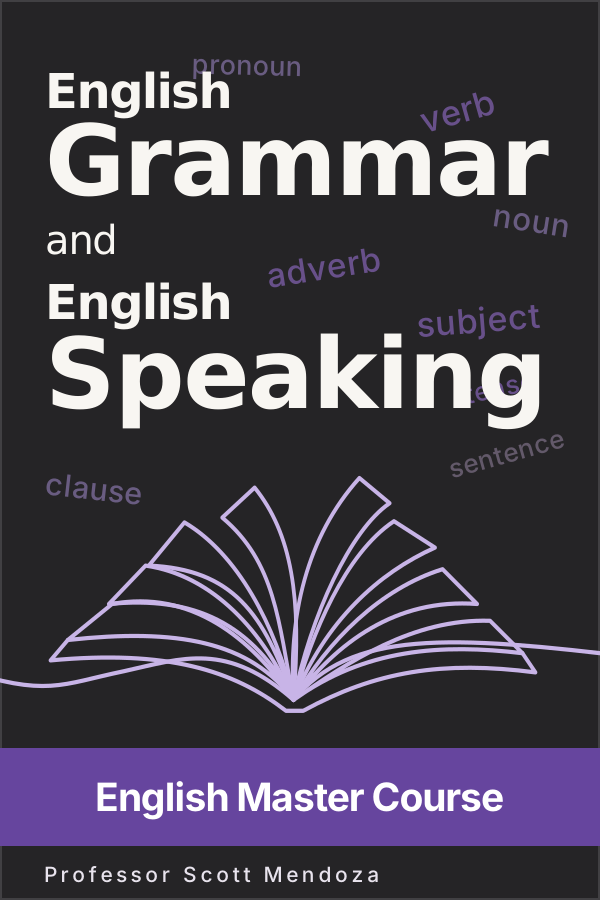
Your next step · Available on Udemy
Strengthen your English foundations.
The available English Grammar and English Speaking Master Course develops broader grammar, sentence-building and communication foundations. Comparisons and contrast help you explain results clearly.
Explore the course English Master Course: English Grammar and English Speaking