Grammar · Free lesson
Had already sent: show what happened earlier in the past
You sent a form at nine. Your tutor checked at ten. You want to explain that the form was already on its way when the tutor looked for it.
 Professor Scott Mendoza
The short answer
To show that something was already complete at a past moment, use had + past participle: When the tutor checked, I had already sent the form. Sending came first; checking came later.
Stand at the later past moment and look back.
In When the tutor checked, I had already sent the form, checked gives the later past reference point. Had sent marks the earlier completed action. Already emphasizes that it was done before that point. The order of the clauses does not change the order of the events.
Sending first, checking later
When the tutor checked, I had already sent the form.
I had already sent the form when the tutor checked.
Had stays the same with I, she and they. The main verb takes its past participle: sent, written or finished.
Build the earlier event
Find the later moment
when the tutor checked
Form the earlier action
I had sent the form
Make completion explicit
I had already sent the form when the tutor checked.
Try it now
Keep the timeline clear.
Read all answers and explanations
You sent the form at nine; the tutor checked at ten. Use the past perfect to complete: “When the tutor checked, I ___ the form.”
had already sentHad already sent places sending before the past check. Had not sent contradicts the timeline; has does not form the past perfect.
Complete the past perfect: “She had ___ the message before the meeting began.”
writtenAfter had, use the past participle written. Wrote is the simple past; write is the base form.
Keep the past-perfect meaning and choose the correct form with they.
They had already finished.Had forms the past perfect with they too. Have finished is present perfect, which does not meet the requested tense; has does not agree with they.
Put it into practice
Fix the earlier action.
Keep had and the completed earlier writing. Correct the verb after had.
I had wrote the message when the meeting began.
See a model answer
I had written the message when the meeting began.
The main verb after had needs its participle, while began supplies the later past point.
A little more clarity
Common questions
A few useful details before you move on.
Do two past actions always need past perfect?
No. A straightforward sequence can use simple past throughout. Past perfect is useful when you look back from one past point and make an earlier connected event clear.
I opened the form and filled it in.
Is already required?
No. Had sent already expresses the earlier-past relationship. Already adds emphasis to completion before the reference point.
I had sent the form when the tutor checked.
Take it into your day
Had + past participle can show a completed action before a later past moment. Choose it for the time relationship, not simply for an old date.
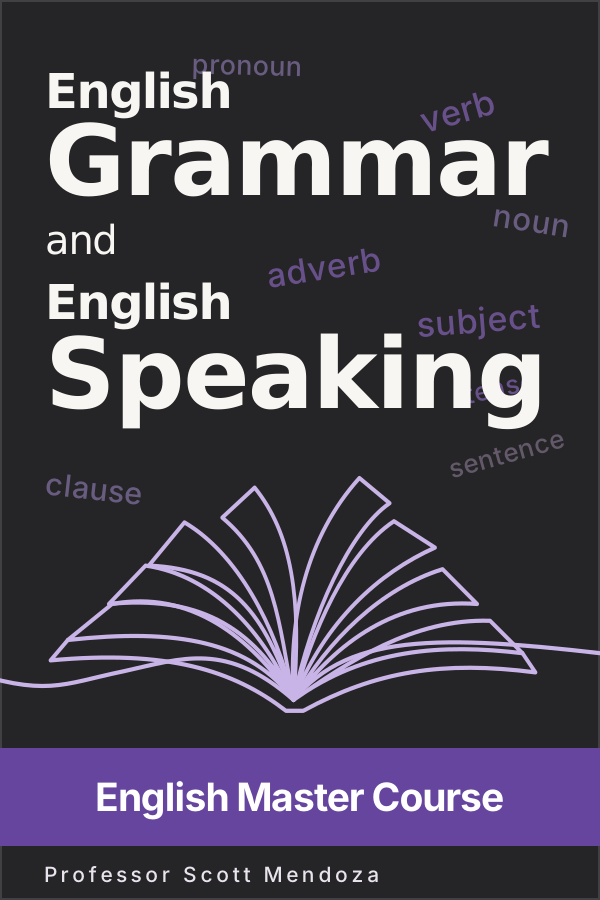
Your next step · Available on Udemy
Tell past events in a clearer order.
This lesson handles one past-time relationship. The English Grammar and English Speaking course includes Past Perfect Tense through Learn it, Review it, Use it and Practice it lessons, with other tenses and speaking practice to build a wider system.
Explore the course English Master Course: English Grammar and English Speaking