Writing · Free lesson
TOEFL email: ask permission and state how long
You want to use a room, borrow equipment or leave early. The reader needs to know what they are being asked to approve and how long it will last.
 Professor Scott Mendoza
The short answer
Name the action and its time: “May I use Room 12 for a study group on Tuesday from 3 to 4 p.m.?” This asks for approval; “I will use Room 12” announces a decision.
Permission phrase + specific action + time boundary.
May I and Could I can both introduce a polite permission request. Add an action the reader can evaluate. For one hour gives a duration; from 3 to 4 p.m. gives a time window. A day or date may also be necessary. Keep any reason brief and relevant, and leave space for the reader to approve or decline.
Compare the examples
May I use Room 12 on Tuesday from 3 to 4 p.m.?
Could I borrow the camera for two days?
Please let me know whether this would be possible.
“Thank you for approving this” assumes approval already exists. If it does not, thank the reader for considering the request instead.
Build the meaning step by step
Ask permission
May I use Room 12
State the purpose
for a study group
Set the time
on Tuesday from 3 to 4 p.m.?
Try it now
Choose a bounded request
Read all answers and explanations
You do not have approval yet. Which sentence asks permission?
May I use Room 12 tomorrow?May I asks the reader to decide. The other sentences announce use or claim approval.
Which phrase clearly gives a duration of two days?
for two daysFor two days gives the length of time. On Tuesday is a day; at two is a time.
Approval is still pending. Which closing avoids assuming the answer?
Thank you for considering my request.Considering acknowledges the review, not an approval that has not happened.
Put it into practice
Make the approval request explicit
You want Room 12 for a study group on Tuesday, 3–4 p.m. You have not received permission. Keep all these details and ask.
I will use Room 12 for my study group. Thanks for approving it.
See a model answer
May I use Room 12 for a study group on Tuesday from 3 to 4 p.m.? Thank you for considering my request.
Could I would also work. What matters is a clear request with the required details and no invented approval.
A little more clarity
Common questions
A few useful details before you move on.
Is May I the only polite choice?
No. Could I can work too. Choose a natural request that fits the reader and situation.
Could I use the room for one hour?
Does until tell the reader the whole time window?
It gives an endpoint. If the start is not already clear, include it when the reader needs both times.
from 3 to 4 p.m.
Take it into your day
A clear permission request is specific about the action and its limits.
Your next step · Available on Udemy
Build the English foundations behind this skill.
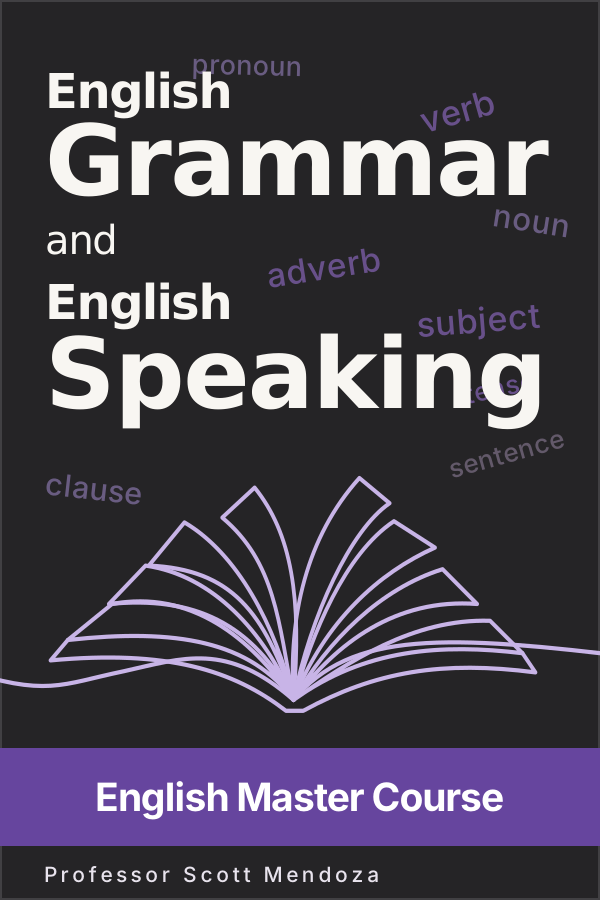
The English Grammar and English Speaking Master Course develops broader grammar, sentence-building, and communication foundations. Clear questions and time phrases support precise requests. The dedicated exam course is coming soon; the available main course is not a complete exam-preparation program.
Explore the course English Master Course: English Grammar and English Speaking