Speaking · Free lesson
TOEFL interview practice: explain your own contribution
An interviewer asks about a group project. Your answer explains the project, but the listener still cannot tell what you did. Add one concrete personal action.
 Professor Scott Mendoza
The short answer
Use we for shared work and I for your own contribution: We organized a campus event. I checked the room bookings. The event started on time. A specific action tells the listener more than I helped a lot.
Separate the team’s achievement from your own action.
Start with enough context to identify the shared task. Then use I with a specific past-tense verb, such as checked, compared or explained. Finish with a supported result when it helps. We completed the presentation describes the team; I compared the survey responses identifies your contribution. You do not need to claim that you led everyone or caused every good result.
Compare the examples
We prepared a presentation about transport.
I compared the survey responses.
We used the comparison in our final presentation.
I contributed by comparing the survey responses is another valid pattern. After by, use the -ing form. It does not make the contribution bigger; it simply names how you helped.
Build the meaning step by step
Give the shared context
We prepared a presentation.
Name your action
I compared the survey responses.
Keep the result accurate
We used the comparison in the presentation.
Try it now
Choose the accurate personal detail
Read all answers and explanations
Your group organized an event. You checked bookings. Which sentence identifies your part?
I checked the room bookings.Only the first sentence names the action you performed. The others can provide context, but not your specific part.
You compared survey responses; others designed and delivered the presentation. Which claim preserves that division?
I compared the responses, and my teammates prepared the presentation.This names your contribution without claiming work done by teammates.
Complete: I contributed by ___.
comparing the answersBy takes an -ing form here: by comparing. I compared is also correct as a separate sentence.
Put it into practice
Make a vague answer specific
Your group created a campus map. You checked building names; another student drew the map. Revise the answer using only these facts.
We made a campus map. I helped a lot.
See a model answer
We made a campus map. I checked the building names, and another student drew the map.
Specific does not mean dramatic. A small truthful action is more informative than a large vague claim.
A little more clarity
Common questions
A few useful details before you move on.
Should I avoid we entirely?
No. Use we accurately for shared work. Add I when the listener needs to understand your personal role.
We planned the event. I checked the bookings.
Do I need an impressive result?
No. State a relevant result only if it is true. Do not invent numbers, leadership or praise to make the story sound better.
We used the corrected names in the final map.
Take it into your day
Give the team credit and make your own contribution clear.
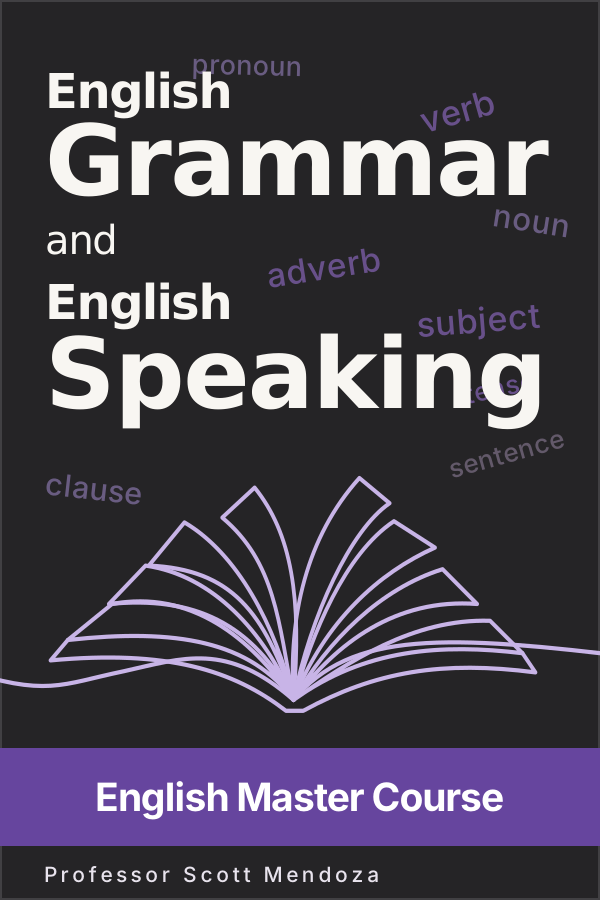
Your next step · Available on Udemy
Build the English foundations behind this skill.
The English Grammar and English Speaking Master Course develops broader grammar, sentence-building, and communication foundations. Clear subjects and action verbs help you explain experiences. The dedicated exam course is coming soon; the available main course is not a complete exam-preparation program.
Explore the course English Master Course: English Grammar and English Speaking