Writing · Free lesson
TOEIC Writing: use both cue words
A fluent sentence can still miss a required cue. A sentence with both cues can still describe the wrong scene.
 Professor Scott Mendoza
The short answer
Check three things: one complete sentence, both cue words, and an accurate scene. For a person sitting on a bench beside a fountain, with cues bench / beside: “A person is sitting on a bench beside a fountain.”
One sentence, both cues, accurate detail.
Start with the main person or object and a verb. Add the second cue where it describes a visible relationship or action. Then compare the whole sentence with the scene. Do not invent a person’s job, purpose, or feelings. In this lesson, the scene is described in words so you can focus on combining the cues.
Compare the examples
A person is sitting on a bench beside a fountain.
A person is sitting on a bench.
A person on a bench beside a fountain.
Beside means next to. Adding a word is not enough: its relationship must fit. “A fountain is sitting on a person” uses familiar words but reverses the scene.
Build the meaning step by step
Build a clause
A person is sitting
Include cue one
on a bench
Include cue two accurately
beside a fountain.
Try it now
Check all three requirements
Read all answers and explanations
Scene: a person sits on a bench beside a fountain. Cues: bench / beside. Choose the complete matching sentence.
A person is sitting on a bench beside a fountain.The third is complete and uses both cues. The first lacks a finite verb; the second omits bench.
Scene: a bicycle stands beside a wall. Which sentence preserves that relationship?
A bicycle is standing beside a wall.Beside keeps the stated next-to relationship. Above and inside add different positions.
The scene only shows a person holding a folder. Which detail should you avoid inventing?
The person is a manager preparing to fire someone.Job and intention are not supplied. The other sentences restate the visible action.
Put it into practice
Combine the cues faithfully
Written scene: two workers are standing near a delivery truck. Cues: workers / near. Choose one complete sentence using both cues without inventing an action.
Two workers near a delivery truck.
See a model answer
Two workers are standing near a delivery truck.
Check both cues again after revising; a grammatical repair must not erase a required word.
A little more clarity
Common questions
A few useful details before you move on.
Should I write two sentences, one per cue?
For this task, combine both cues in one sentence describing the scene. Two separate fragments do not meet that goal.
A worker is standing near the entrance.
Can I add other words?
Yes. You need words that make the sentence grammatical and match the scene. Keep the required cues and avoid unsupported details.
A person is sitting on the bench beside the entrance.
Take it into your day
A good sentence must pass the grammar, cue, and scene checks.
Your next step · Available on Udemy
Build the English foundations behind this skill.
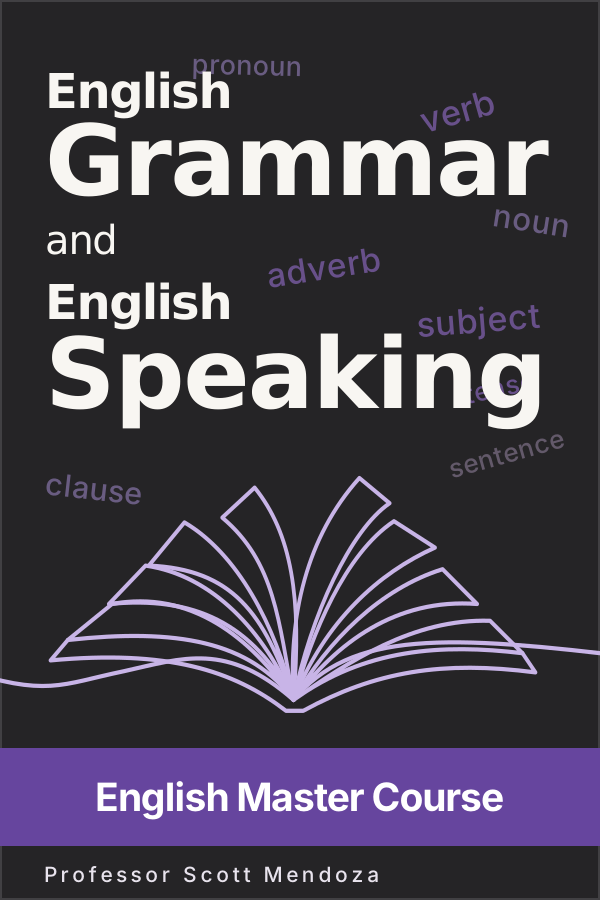
The English Grammar and English Speaking Master Course develops broader grammar, sentence-building, and communication foundations. Sentence-building foundations help you connect subjects, verbs, and descriptive phrases. The dedicated exam course is coming soon; the available main course is not a complete exam-preparation program.
Explore the course English Master Course: English Grammar and English Speaking