Speaking · Free lesson
Correct yourself clearly: “Sorry, I mean…”
You know the correct day, but the wrong word comes out. You can repair that detail without restarting the whole conversation.
 Professor Scott Mendoza
The short answer
For a small mistake in what you just said, use Sorry, I mean… followed by the correct detail: Friday—sorry, I mean Saturday. A bare sorry does not tell the listener which information to use.
Mark the repair, then give the replacement.
In The shop closes at six—sorry, I mean seven, seven replaces six. You can also refer back: I said six, but I meant seven. Both make the change explicit. If the listener checks the time again, confirm the corrected time instead of adding another possibility.
Compare the examples
The shop closes at six—sorry, I mean seven.
I said six, but I meant seven.
Yes, seven is correct.
The corrected detail must match what you actually know. I mean signals a repair; it does not make a guess certain.
Build the meaning step by step
Notice the wrong detail
six
Signal your correction
Sorry, I mean…
Give the intended detail
seven
Try it now
Make the corrected detail clear.
Read all answers and explanations
You said Monday, but the confirmed day is Tuesday. Which repair gives that fact?
Sorry, I mean Tuesday.Tuesday replaces the mistaken Monday. Repeating Monday or offering both days does not communicate the confirmed correction.
You said gate four by mistake. The correct gate is five, and the listener heard you accurately. Own and correct the mistake.
I said four, but I meant five.This acknowledges your original words and supplies five. Blaming the listener contradicts the situation.
You corrected the time to seven. The listener asks, “So, seven?” Confirm without changing it again.
Yes, seven is correct.The first reply confirms the corrected time. The others reverse the repair or create uncertainty.
Put it into practice
Repair a meeting time
The agreed time is seven. You accidentally said six. Correct yourself and then confirm seven.
- Riley
Did you say six?
See a model answer
- Riley
Did you say six?
- You
Sorry, I mean seven.
- Riley
So, seven?
- You
Yes, seven is correct.
- Riley
Thanks. I'll be there at seven.
The repair replaces six with seven. The confirmation keeps seven as the final agreed detail; the alternative I said six, but I meant seven also works.
A little more clarity
Common questions
A few useful details before you move on.
Is sorry always required?
No. I mean can mark a correction by itself. A brief sorry is a common way to acknowledge a small slip; the corrected detail is the essential part here.
We need four copies—I mean five.
Does I mean always correct an error?
No. It can make a point clearer too. Read the surrounding words to see whether the speaker replaces information or explains it.
It was crowded. I mean, there wasn't an empty seat.
Take it into your day
A useful correction gives the replacement, not just an apology.
Your next step · Available on Udemy
Build clearer everyday conversations.
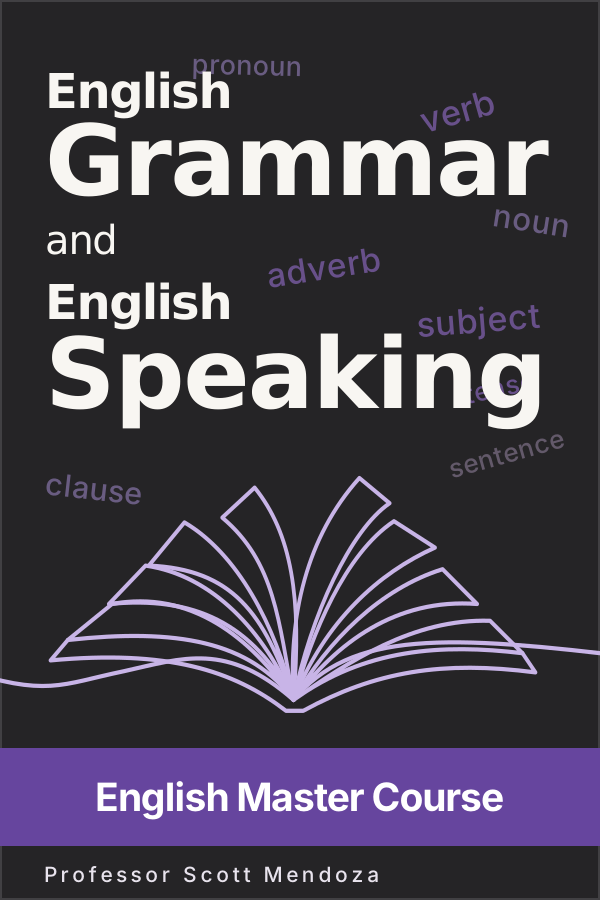
You have practiced repairing one detail in a conversation. The available English Grammar and English Speaking Master Course develops broader conversation and sentence-building foundations so you can express complete ideas more clearly.
Explore the course English Master Course: English Grammar and English Speaking