Phrasal verbs · Free lesson
Count on someone: trust them to help
You are arranging a picnic for tomorrow. Rosa has offered to bring the cups, and she always does what she promises. You tell the organiser, “We can count on Rosa to bring the cups.” You are expressing confidence in her, not counting anything.
 Professor Scott Mendoza
Meaning in this lesson
count on someone
Trust a person to provide dependable help or do what you expect.
Example
“We can count on Rosa to bring the cups.”
We trust Rosa to bring the cups.
The short answer
Count on someone means trust that person to help or do what you expect. Keep the person after on: count on her, not count her on. Add to + verb to name the action: count on her to help.
First name the person you trust; then add the action if needed.
Use count on Rosa or count on her. The person stays after on, even with a short pronoun. To name what you expect, add to and the base verb: count on her to bring the cups. If you are the helper, “You can count on me” reassures the other person.
Build the message in three steps
You can count on Rosa.
You can count on her.
You can count on her to bring the cups.
This expression can show confidence, but it cannot prove that a future action has already happened. Tomorrow in our scene makes that especially clear.
Read the trust behind the sentence
There is a future need
We need cups for the picnic tomorrow.
The helper is dependable
Rosa has offered to bring them and always keeps her promises.
You express your confidence
We can count on Rosa to bring the cups.
Try it now
Choose the dependable-help meaning.
Read all answers and explanations
What does “We can count on Rosa to bring the cups” mean in the picnic scene?
We trust Rosa to bring the cups.The speaker trusts Rosa to bring the cups. The sentence is not a report about counting cups or completing a delivery.
Replace Rosa with her. Which sentence correctly expresses reliable help?
We can count on her to help.Use count on her to help. The pronoun stays after on; with does not replace on in this expression.
Before tomorrow’s picnic, someone says, “We can count on Rosa to bring the cups tomorrow.” What does the sentence tell us?
The speaker trusts Rosa to bring the cups tomorrow.The speaker expects reliable help tomorrow. This is confidence about a future action, not evidence that the cups have arrived.
Build it yourself
Offer your help with the picnic.
You will bring the cups. Reassure the organiser with all six pieces. Start with You can and finish with the cups.
Build a short statement of dependable help. Select a piece again to move it back.
Your offer of help
0 of 6 piecesYour chosen pieces will appear here.
See a model answer
You can count on me to bring the cups.
You can count on me to bring the cups names you as the helper and tells the organiser what to expect.
A little more clarity
Common questions
A few useful details before you move on.
Can I say count me on?
Not for this meaning. Keep on before the person: count on me. Count me in is a different expression used when you want to join an activity.
You can count on me to arrive early.
Does count on mean the help has already happened?
No. It expresses reliance or confidence. Other words give the time. In an example about tomorrow, the action is still expected.
We can count on her to help tomorrow.
Take it into your day
You can count on me is an offer of dependable support. Keep me after on and add to + verb when you name the help.
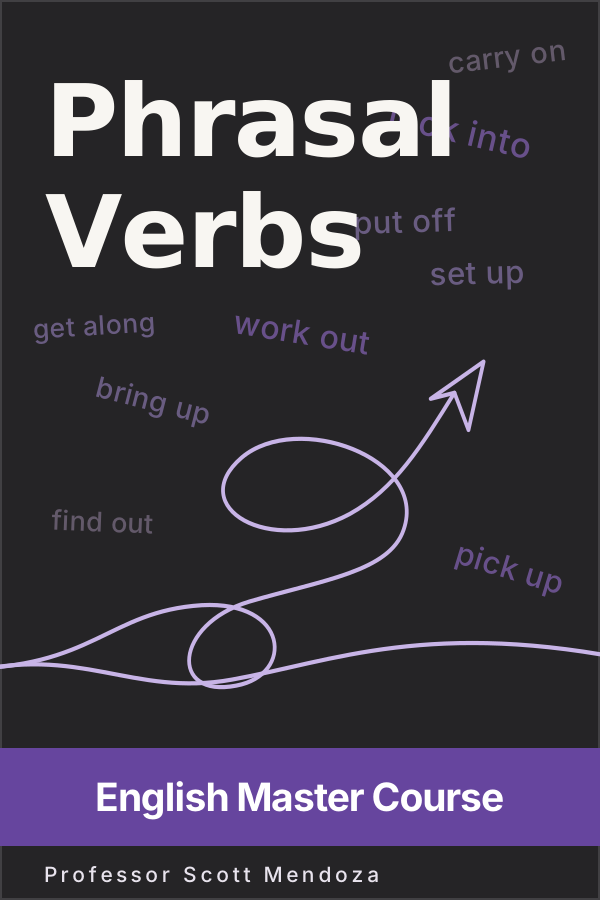
Your next step · Available on Udemy
Connect more phrasal verbs with real situations.
Learn 350+ useful phrasal verbs in the English Master Course for Phrasal Verbs, including count on for relying on someone. Build beyond this one pattern with the course’s wider situations and practice.
Explore the course English Master Course: Phrasal Verbs