Grammar · Free lesson
The colleague who handles bookings: identify a person
Several colleagues work at the office. You need the one responsible for bookings. A short description can identify that person even when you do not know their name.
 Professor Scott Mendoza
Meaning in this lesson
who + verb
A pattern for identifying a person by something they do. Who is the subject inside the identifying description.
Example
“Ask the colleague who handles bookings.”
Ask the particular colleague responsible for bookings.
The short answer
Say “Ask the colleague who handles bookings.” Who connects the person to the identifying detail and acts as the subject of handles. Do not add she or he after who in this pattern.
Name the person, then add the identifying action.
Start with the colleague. Add who handles bookings to explain which colleague you mean. Who already does the subject’s job inside that description, so “who she handles” repeats the subject. The whole sentence is a request, not a question beginning with Who.
Turn two facts into one useful description.
Ask that colleague. She handles bookings.
Ask the colleague who handles bookings.
For one colleague, use handles. For several colleagues, use handle: “the colleagues who handle bookings.” The verb matches the person or people described.
Help someone find the right person
Start with the person
Ask the colleague.
Identify that person
the colleague who handles bookings
Put it together
Ask the colleague who handles bookings.
Try it now
Point to the right person.
Read all answers and explanations
Identify the colleague responsible for bookings. Choose the sentence without a repeated subject.
Ask the colleague who handles bookings.Who is the subject of handles. Adding she repeats it; removing who leaves the description without its required connection.
Complete the description of several people: “We need colleagues who ___ Korean.”
speakColleagues is plural, so the verb inside the who clause is speak. Speaks is singular; speaking alone does not supply the finite verb here.
You need someone responsible for deliveries, not bookings. Which sentence identifies that person?
Ask the colleague who handles deliveries.Who handles deliveries identifies the colleague by their responsibility. The second chooses a different role; the third gives a time but does not identify the responsible person.
Put it into practice
Remove the repeated subject.
Keep the identifying who clause and the bookings responsibility.
Ask the colleague who she handles bookings.
See a model answer
Ask the colleague who handles bookings.
The corrected description sits after colleague and tells the listener which person to ask.
A little more clarity
Common questions
A few useful details before you move on.
Could I use that instead of who?
Yes, in this identifying clause about a person, that is also possible. This lesson practises who; that is not automatically wrong for people.
Ask the colleague that handles bookings.
Do I need commas around this who clause?
Not when the clause identifies which colleague you mean. A clause giving extra information about an already identified person is a different use and can take commas.
The colleague who handles bookings is away today.
Take it into your day
Person + who + verb can identify the person. When who is that verb’s subject, do not repeat he or she.
Your next step · Available on Udemy
Build clearer descriptions with connected grammar.
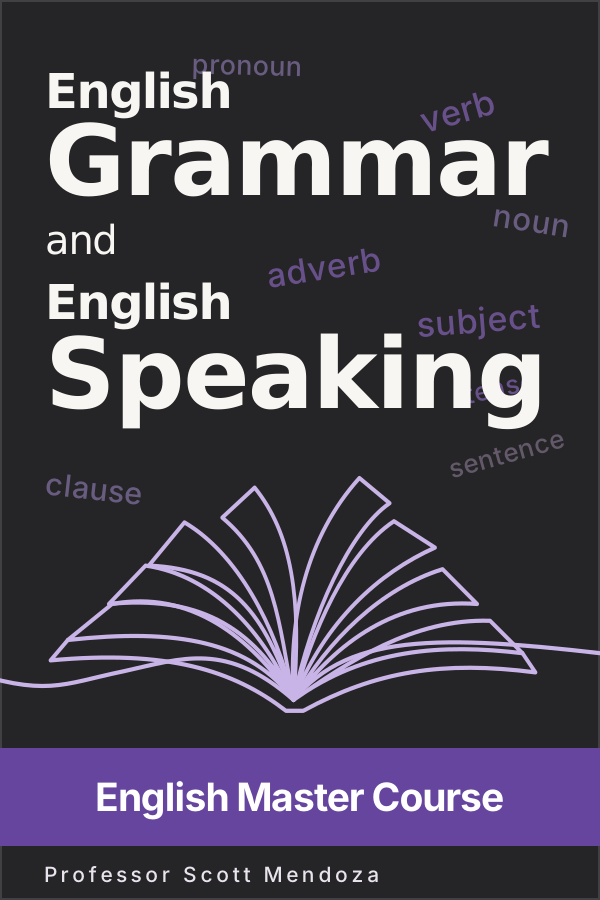
This lesson practises one subject pattern with who. The English Grammar and English Speaking course includes an Adjective (Relative) Clauses section with Learn it, Review it, Use it and Practice it lessons, so you can develop the wider skill of joining information into clear descriptions.
Explore the course English Master Course: English Grammar and English Speaking