Grammar · Free lesson
Everyone is or everyone are? Match the verb
You are checking whether a whole group is ready. The group contains several people, but the word everyone still takes a singular verb.
 Professor Scott Mendoza
The short answer
Everyone means every person in the relevant group, but it takes a singular verb: everyone is, everyone has, everyone knows. You can refer back to those people with they: Everyone is here. They are waiting outside.
Match the verb to everyone.
Everyone is one word meaning every person. In an ordinary present statement, follow it with is, has or a main verb such as needs. “Everyone needs a ticket” includes each person in the group. If a later sentence uses they, that later verb agrees with they: “They have their tickets.”
The subject changes the verb form.
Everyone is ready.
They are ready.
Everyone needs a ticket.
Everyone and they can refer to the same group here, but they take different verb forms.
Check the subject and the verb
Find everyone
It refers to every person in the group.
Choose the statement form
Everyone is ready. Everyone has a ticket.
Check a later they separately
They are ready. They have their tickets.
Try it now
Check what you’ve learned.
Read all answers and explanations
Complete the ordinary statement: “Everyone ___ ready.”
isEveryone takes a singular verb, so use is.
Choose the ordinary present statement.
Everyone has a map.Has is the singular present form used with everyone here.
“Everyone is here. They are waiting outside.” Is the verb pattern possible?
Yes. Each verb matches its own subject.Is matches everyone; are matches they. The second sentence can refer back to the people in the first.
Put it into practice
Keep the whole group ready.
Every person in the group is ready. Keep everyone as the subject and repair the verb.
Everyone are ready.
See a model answer
Everyone is ready.
The correction changes agreement without reducing the group to just one person.
A little more clarity
Common questions
A few useful details before you move on.
Does everybody use the same verb pattern?
Yes. Everybody also takes a singular verb in these ordinary present statements.
“Everybody wants a clear answer.”
Why is it “Does everyone need,” not “Does everyone needs”?
Does already carries the singular present form in this question. The main verb stays in its base form, need.
“Everyone needs a map.” → “Does everyone need a map?”
Take it into your day
Give a short group update using everyone. Then continue with a sentence using they.
Your next step · Available on Udemy
Build more reliable subject-and-verb patterns.
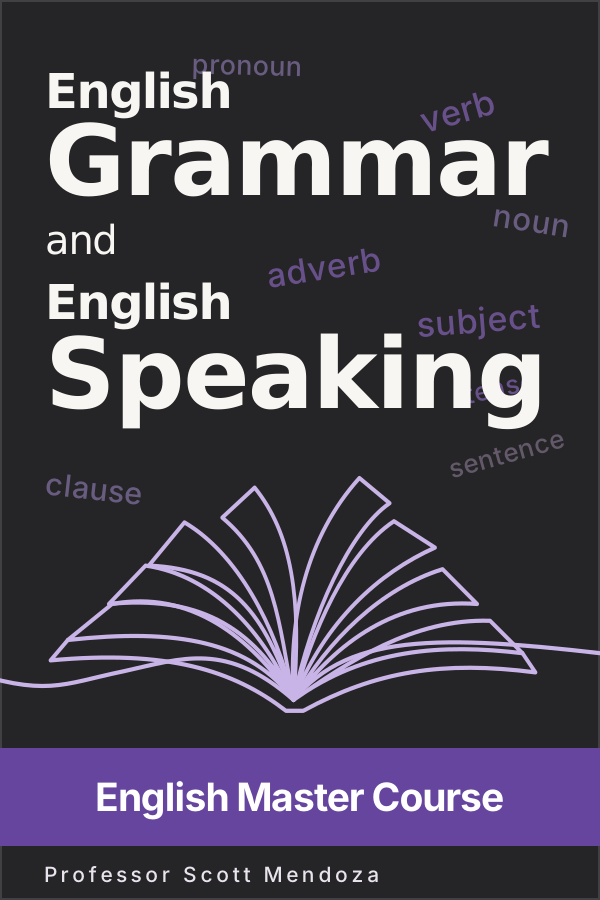
You’ve practiced agreement with everyone. Develop a wider foundation in grammar and sentence structure through the English Grammar and English Speaking course, with conversation examples, quizzes and practice materials.
Explore the course English Master Course: English Grammar and English Speaking