Phrasal verbs · Free lesson
Warm up: get ready for physical activity
The tennis session has not started yet. Players are doing some easy movements first. How do you describe this preparation?
 Professor Scott Mendoza
Meaning in this lesson
warm up
Prepare for a physical activity with gentle movement or practice.
Example
“We warm up before tennis practice.”
We prepare our bodies before the main tennis practice.
The short answer
In an exercise context, warm up means prepare with lighter movement or practice before the main activity. The verb is two words: We warm up. Put the past ending on warm: warmed up. A warm-up is the noun for the preparation activity.
Name the preparation, not the whole session.
Warm up describes the preparatory part before a more demanding physical activity. The verb changes with the sentence: warm up, warms up, warmed up. Up stays unchanged. A warm-up names the activity itself, so it needs a verb in a sentence such as We do a warm-up.
An action or the name of an activity?
We warm up before tennis practice.
We warmed up before yesterday’s match.
The coach leads a short warm-up.
The spelling helps show the role: warm up is the action; a warm-up is its name. You may also see the noun written warmup.
Change the sentence, keep the meaning
Describe a habit
We warm up.
Describe a finished action
We warmed up.
Name the activity
We do a warm-up.
Try it now
Choose the form that fits.
Read all answers and explanations
Choose the standard two-word verb in this sentence.
We warm up before tennis practice.The verb is warm up, two words without a hyphen. Warm-up and warmup are noun spellings, not the verb form needed here.
The preparation happened yesterday. Choose the correct completed-action form.
We warmed up before the match.Add -ed to warm and keep up unchanged: warmed up. Do not add the ending to up.
Before tennis practice, the players warm up. What does that mean here?
They are preparing physically before the main activity.In this physical-activity context, they prepare before the main activity. They are not heating a drink or celebrating afterward.
Put it into practice
Repair the verb spelling.
Keep the sentence about what we do before tennis practice. Use warm up as the verb, not as a noun.
We warm-up before tennis practice.
See a model answer
We warm up before tennis practice.
The sentence describes an action. The noun would need a different structure, such as We do a warm-up.
A little more clarity
Common questions
A few useful details before you move on.
Does up become upped in the past?
No. Change warm to warmed and leave up alone. The same word remains after the verb.
The players warmed up.
Is a warmup without a hyphen always wrong?
No. Warmup is also used as a noun spelling. For the verb in this lesson, use two words: warm up.
We warm up before the session.
Take it into your day
We warm up. Yesterday, we warmed up. The preparation is a warm-up.
Your next step · Available on Udemy
Move from one useful expression to a wider range.
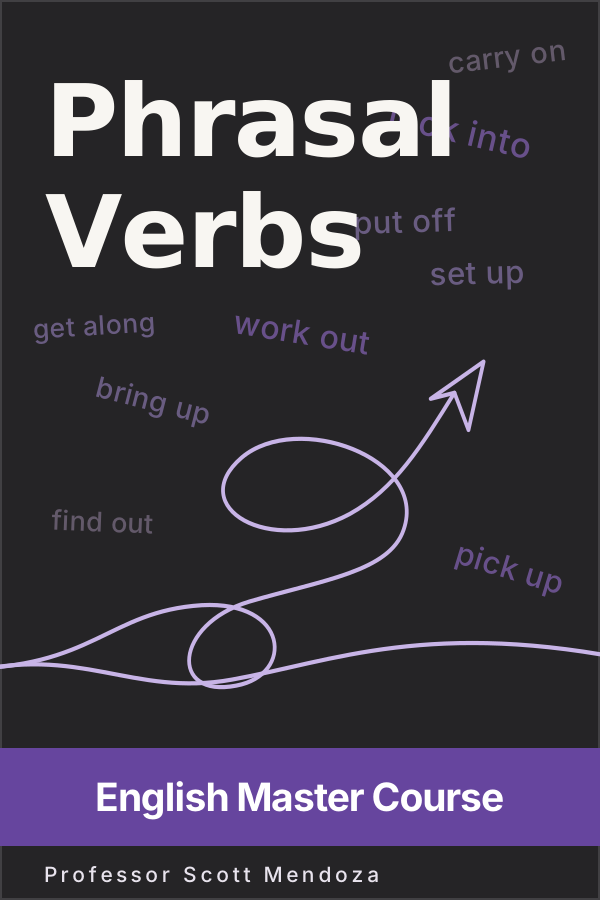
The Phrasal Verbs course teaches 350+ useful phrasal verbs. Warm up appears in its sports, exercise and physical activity section, with the preparation meaning you practised here and more everyday contexts across the course.
Explore the course English Master Course: Phrasal Verbs