Phrasal verbs · Free lesson
Run out of: meaning and everyday examples
No printer paper left? “Run out of” gives you a clear way to explain the problem.
 Professor Scott Mendoza
Meaning in this lesson
run out of
To use all of an available supply, so none is left.
Example
“We ran out of printer paper before the final page.”
We used all our printer paper and did not have enough to finish.
The short answer
If you run out of something, you use the available supply and have none left. Name the supply after of: We ran out of printer paper.
Name the missing supply after of.
Use a person or group as the subject, then run out of, then the supply: “We ran out of printer paper.” Keep the whole pattern together. Change run to fit the time: ran is the past form, while have or has is followed by run. You can use the expression for an everyday supply, such as dish soap, or something limited, such as time.
Same problem. Different time patterns.
We ran out of printer paper yesterday.
We have run out of dish soap, so I’ll buy some.
We ran out of time before the last question.
The named supply follows of. The verb changes in “ran out” and “have run out,” but out of keeps the same order.
Explain what is missing
Name who used the supply
We, they or your team can be the subject.
Choose the verb form
Use ran for a finished past event, or have/has run when that pattern fits.
Add out of and the supply
We ran out of printer paper. Now the listener knows what you need.
Try it now
Check what you’ve learned.
Read all answers and explanations
We ran out of printer paper. What is true?
There is no paper left in our supply.Run out of means the supply is gone, rather than merely low or partly used.
Complete: Yesterday, we ___ out of dish soap.
ranYesterday locates a past event, so use ran.
Choose the complete pattern.
We ran out of printer paper.The supply comes after run out of.
Build it yourself
Explain the printer problem.
You have used all the paper. Build a message starting with “We’ve” to explain why you cannot print the next page.
Choose every piece in order. Select a piece again to move it back.
Your message
0 of 4 piecesYour chosen pieces will appear here.
See a model answer
We’ve run out of printer paper.
“We’ve” means “we have.” Have is followed by run, and printer paper names the supply after out of.
A little more clarity
Common questions
A few useful details before you move on.
Is it “have run out” or “have ran out”?
Use have run out or has run out. Run is the past participle used after have/has; ran is the simple-past form.
“We ran out yesterday.” / “We have run out again.”
Can I say “the paper ran out” without of?
Yes. Here, paper is the subject. When you name what someone has used up, place that supply after of.
“The paper ran out.” / “We ran out of paper.”
Take it into your day
Think of a supply you used up recently. Say what you ran out of, then explain what you did next.
Your next step · Available on Udemy
Explain everyday problems more naturally.
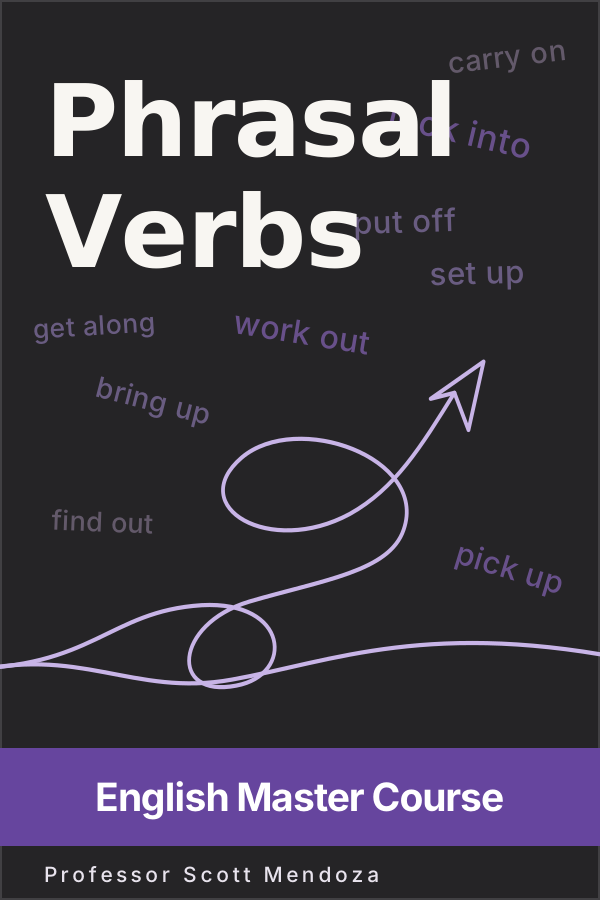
Running out of a supply is one useful situation. Build a wider range with 350+ phrasal verbs, full conversations, speaking practice and worksheets in the Phrasal Verbs course.
Explore the course English Master Course: Phrasal Verbs